four email funnels to increase conversions

9/9/26
web design
4 email funnels to increase conversions
Because “send another email and hope for the best” isn’t exactly a strategy…
If you’re sending emails to your audience one at a time, constantly trying to figure out what to say, when to say it, and whether anyone is actually going to buy something, I have good news for you… You’re making this harder than it needs to be.
Enter: Email funnels. An email funnel is a series of automated emails designed to guide someone through a specific stage of the customer journey. Instead of sending the same email to everyone on your list and crossing your fingers, a funnel delivers targeted messages based on what someone has or hasn’t done. They just joined your list? Welcome funnel. They added something to their cart and disappeared? Abandoned cart funnel. They haven’t opened an email in six months? There’s a funnel for that too.
The beauty of email funnels is that they can create a more personalized experience without requiring you to manually write and send every. single. email. Your subscribers get information that’s relevant to where they’re at in the buying process (or just engaging with your brand), while you get an automated marketing system that can keep working for you in the background. It’s pretty much a true “set it and forget it” kind of thing.
And here’s arguably the best part. For most small businesses, the primary ongoing cost is the email marketing platform itself, making it a relatively low-cost way to nurture an audience, drive sales, and increase the return on the audience you’ve already worked to build.
P.S. Not sure what platform is right for your business? I broke down the best options for Shopify and Squarespace for you already.
So, with allllllll that being said, what email funnels are worth having in your marketing lineup?
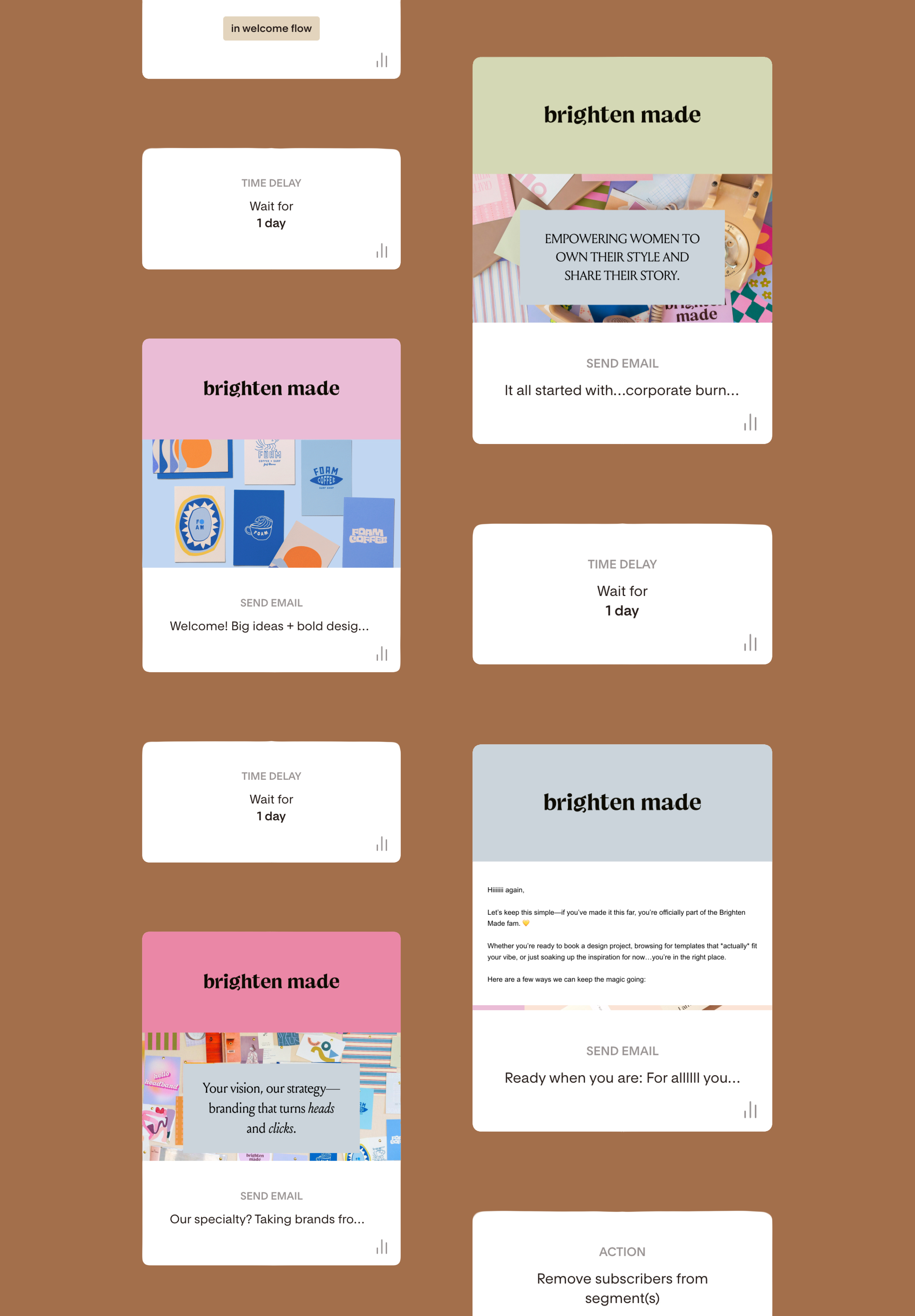
Welcome series
What’s it for? Greeting new subscribers and turning strangers into familiar faces.
In this day and age, people aren’t signing up for emails left and right. When someone hands you their email address, it’s kind of a big deal. They’re essentially letting you know that in a seaaaaaaaaa of emails they’d like to hear from you. And a welcome series is your chance to make a great first impression. Especially while your brand is still fresh in their mind.
A welcome series is typically a sequence of three to four emails sent over the course of a week or two. For an ecommerce brand, that might start with a welcome discount before introducing your products and sharing what makes your brand different. For a service-based biz, it could include a free resource, your brand story, your best educational content, or an intro to how you work.
Here’s the thing though, you’re not trying to cram your entire business into four emails. Instead, think of it as the welcome it is. It’s a quick introduction. Your early emails should communicate what you offer, who you help, and why someone should care. You’re building brand awareness first and foremost and giving subscribers a reason to stick around before immediately hitting them with a sales pitch.
To make your welcome series even more impactful, you should absolutely be personalizing the experience when you can. Here’s an example. If someone signed up specifically to receive a guide about skincare, it makes more sense to follow up with a welcome email of related content than to immediately send them info about an unrelated sale. The more relevant the email feels, the less it feels like you’re just shouting into a crowded inbox to see what sticks.
On that note, be useful in your welcome series! Share something interesting, solve a small problem, or point subscribers toward a great resource. Show them what makes your business worth paying attention to. When you build familiarity and trust first, the eventual sales email feels a whole lot more natural.
Abandoned cart funnel
What’s it for? Recovering sales from people who were thissssss close to buying.
Where are my e-commerce girlies at? FEW things are more frustrating than seeing someone add a product to their cart and then vanish into thin air (...guilty). They were SO close! But before you dramatically stare out a window à la a 2000s rom-com, remember: an abandoned cart doesn’t necessarily mean they changed their mind.
People abandon carts for all sorts of reasons. Maybe they got distracted, they wanted to think more about it, the shipping costs surprised them, or their toddler started screaming in the background and woke the baby up from her nap… The point is, they already showed a high level of interest by adding the product to their cart. You’re not trying to convince a complete stranger to buy. You’re reminding someone who was already considering it to come back and finish the job.
THIS is what makes an abandoned cart funnel so effective. Instead of sending another generic promotional email to your entire audience, you’re reaching out to a very specific group of people based on an action they already took.
A simple abandoned cart sequence might include three emails. The first can be a gentle reminder sent relatively soon after the cart is abandoned. The second, sent later, can answer common questions, address potential hesitations, or feature reviews and other social proof. The third can introduce a small, time-sensitive incentive if it makes sense for your business, such as free shipping or a limited-time discount.
Urgency can also help move someone from “I’ll come back to this later” to “Okay, fine, I’m buying it.” People hate FOMO, what can I say? If a product is low in stock or a promotion is genuinely ending soon, let them know. Just make sure the urgency is real. Fake scarcity is NOT a good look, friends.
Also, I know I’m a designer, so obvi I have to mention this, but visually you need to show up. Strong product photography matters here. Show them exactly what they left behind and make it easy to get back to checkout. A clear CTA near the top of the email can help, and you can repeat the CTA later in the message too.
The golden rule here? Make it easy. They already added it to their cart. Your job is simply to give them a reason, and an easy path, to finish what they started.
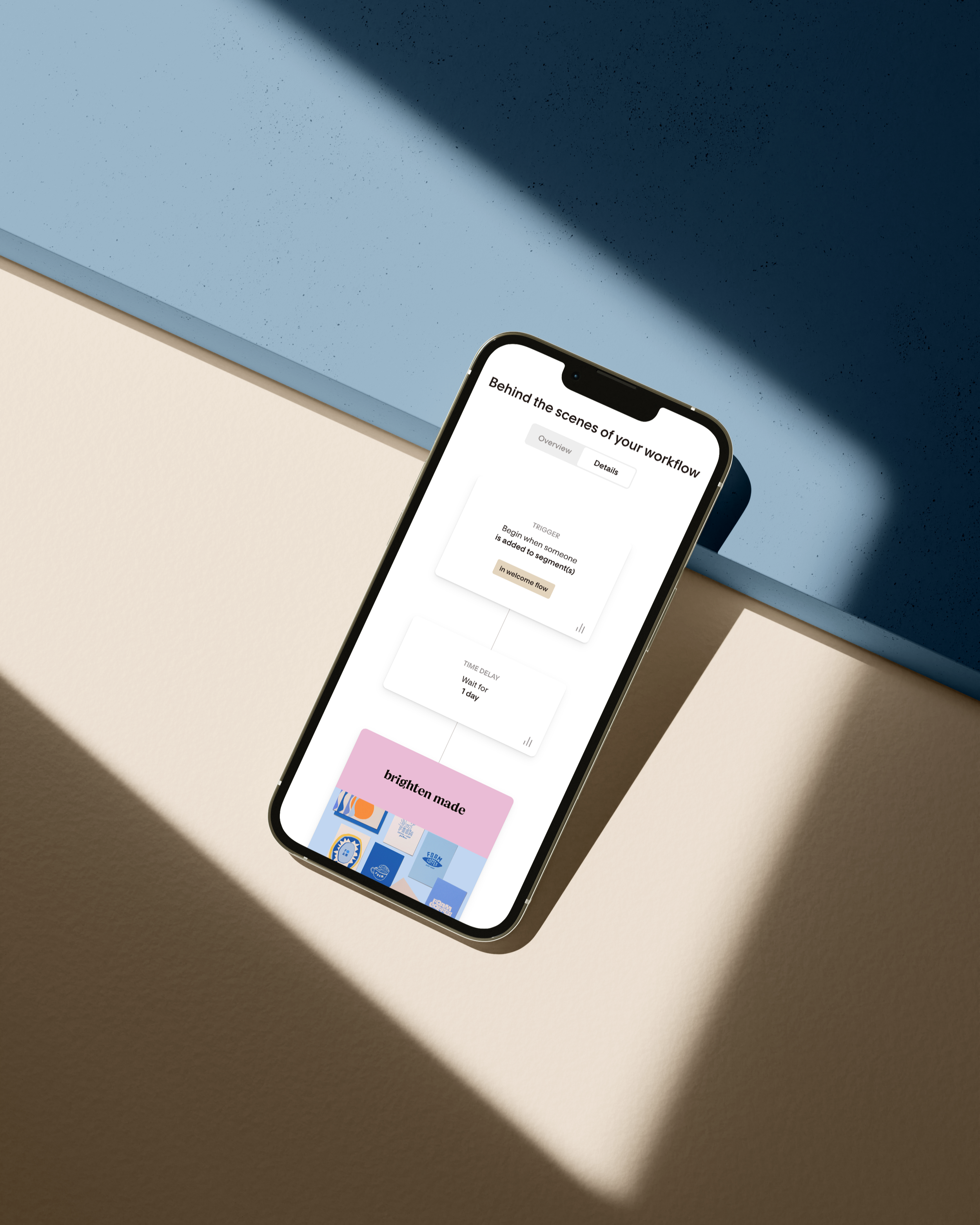
Launch sequence
What’s it for? Selling a course, product, service, or offer with a specific launch window.
Here’s where we’re going to get a bit more strategic. If you’re opening enrollment for a course, introducing a new product, launching a new service, or selling anything with a specific deadline, you don’t want to send one email announcing it and then disappear into the night.
A strong launch sequence builds momentum. It introduces the offer, explains why it matters, addresses the questions and objections that might keep someone from enrolling, buying, etc., and it gives potential customers enough information to make an informed decision.
Trust is a HUGE part of this process. Before asking someone to make a purchase, use your emails to demonstrate your expertise and provide genuine value. Solve a small problem, teach them something, explain your approach, and show them what’s possible when they work with you or use your product. You want to give people a preview of the experience and show them you know what you’re talking about.
Then comes addressing potential objections. Maybe they’re wondering whether the product will work for them specifically. Maybe they think the course is too expensive or they don’t have the time. Your launch sequence gives you room to address those concerns directly rather than expecting potential customers to magically overcome them on their own. A great way to help with that is social proof. Share customer stories, testimonials, results, reviews, or examples that demonstrate what your offer can actually do. People want to know that others have taken the leap before them and lived to tell the tale.
A launch funnel might include four to six emails spread across the launch period. You could announce the offer when the cart opens, follow up with value and education, tackle common objections, share customer success stories, and then send final reminders as the deadline approaches. The exact number and timing will depend on your offer and audience, but the general idea is to create a clear, structured narrative rather than sending a random as heck collection of (obnoxious) sales emails.
Last but not least, a launch sequence only works if you have an actual deadline. Without a deadline or closing date, your launch can start to feel like an offer that will be available forever, which conveniently makes “meh, maybe later” very easy.
Re-engagement funnel
What’s it for? Waking up inactive subscribers and keeping that email list of yours healthy.
Did you know it’s actually good for you to clean up that email list every now and then? When it comes to email marketing, bigger isn’t always better.
Having 10,000 people on your email list sounds impressive, but if half of them haven’t opened an email in two years, that number isn’t exactly the flex you think it is. A re-engagement funnel gives inactive subscribers one more chance to come back before you decide whether they still belong on your list. Which I know kind of sounds scary after you worked SO hard to build the dang list in the first place.
Quick sidebar… why would I want to remove any subscribers? Because some mailbox providers track your engagement, and sending to active users helps keep your other emails out of the spam folder. Plusssss, removing fake or dead addresses prevents hard bounces that damage domain trust. It helps you get more accurate campaign data, and some email platforms charge based on subscriber list size, so cutting out those inactive users could potentially save you some money.
Annnnd we’re back to re-engagement email funnels.
A re-engagement sequence typically includes two to three emails aimed specifically at subscribers who haven’t opened or clicked your emails within a certain period of time. The first email can be a simple check-in that reminds them why they signed up in the first place. You can highlight what’s new, share something valuable (see a common theme here?), or simply ask whether they’re still interested in hearing from you.
If they still don’t bite, the second email can give them a more tangible reason to return. For e-commerce brands, this could be a special offer or free shipping if you can swing it. For other brands, think exclusive content or another piece of info that’s genuinely useful. The idea is to give initiative subscribers a reason to re-engage rather than simply reminding them that hi, you’re still here.
The final email can be a little more direct. Literally “Do you still want to hear from us?” Give them a clear button to stay subscribed and let them know that you’ll remove them from your list if they don’t want to continue receiving emails.
At the end of the day, it’s totally up to you if you want to remove inactive subscribers if you don’t want to, but (as previously mentioned) periodically cleaning your list has its benefits.
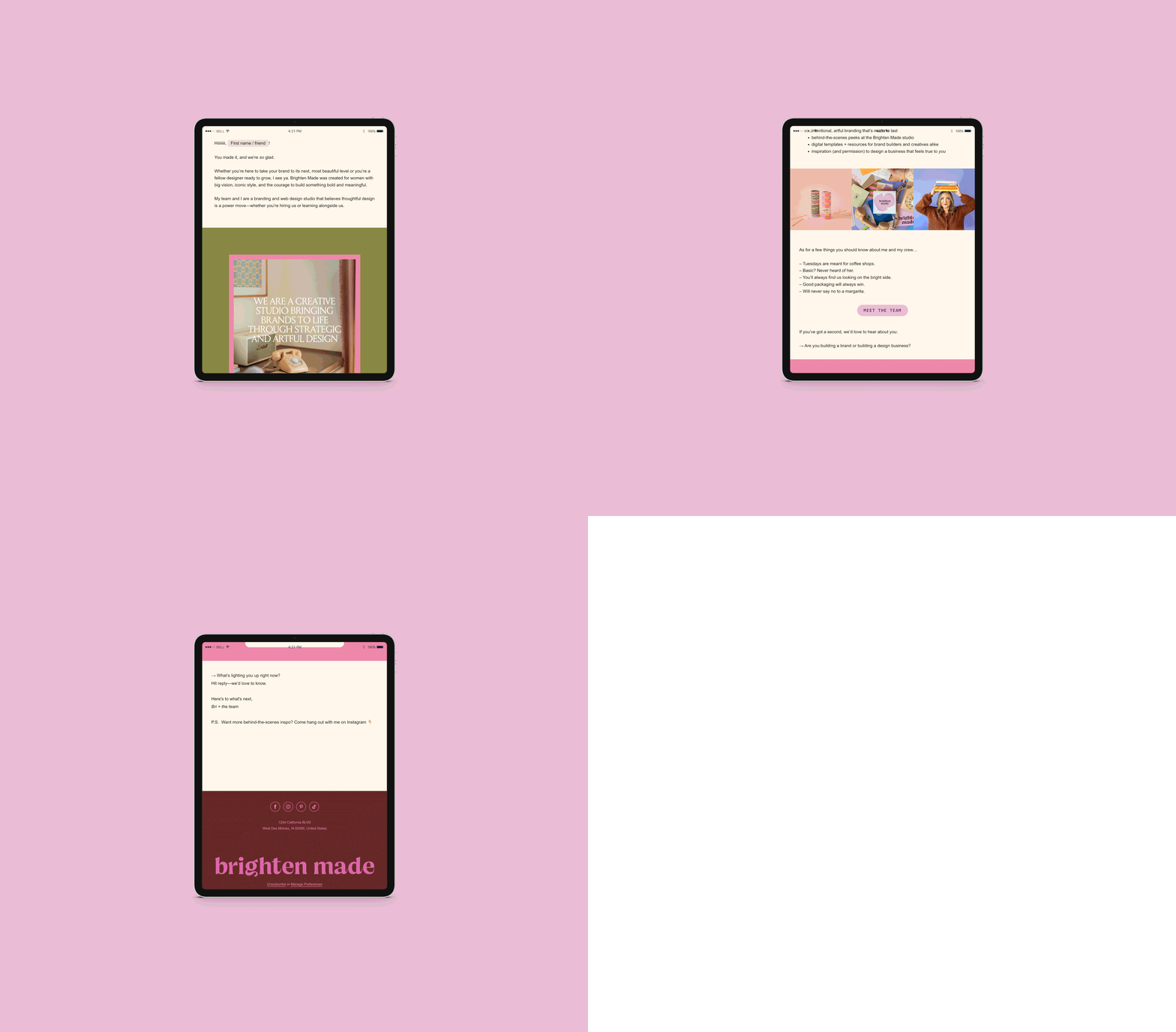
This is overwhelming. What email funnel should I start with?
Relax. You don’t need to build every possible email funnel and automation. Spoiler: there’s no prize for having the most complicated collection of automated emails. Instead, start with the funnel that solves your biggest problem. And truthfully, every brand should at least have a welcome sequence.
If you run an e-commerce business, an abandoned cart funnel is a smart place to start because it can help recover purchases from people who have already shown buying intent. If you’re a service provider or content-driven brand, a welcome series is a must. If you’re selling courses, digital products, or services during specific launch periods, a launch funnel might be a good starting point. And if your email list has been collecting major dust right alongside your old AIM account, a re-engagement sequence is probably overdue.
We don’t want to send out more emails just for the sake of sending more emails. It’s to make sure the emails you’re sending are more relevant, timely, and useful to your audience. The best email funnel is one that doesn’t feel like a funnel at all. It feels like the right message showed up at exactly the right time, and your ideal subscriber is happy it did.