does your client experience kind of suck? enter: project timelines
12/17/25
business
does your client experience kind of suck? enter: project timelines
let’s talk about the unsung hero of every smooth project: a solid timeline
Every successful project starts with one major thing: clarity. And let’s be real, if you’re a designer or any sort of creator, you’ve been there. That client who ghosts you for two years, then pops back up wanting to pick up where you left off. The one who signs a contract, then disappears, turning a three-week project into a three-month saga of back and forth. That time when someone hired you for a website but never actually gave you the content you needed. It’s all kind of chaos.
Projects drag. Deadlines blur. And that initial excitement you felt at kickoff? It fizzles out. That’s why at Brighten Made, timelines are non-negotiable. We map out every phase from discovery to final delivery so both sides know exactly what’s happening, when it’s happening, and what’s expected. It’s accountability for everyone, and it’s covered our butts more than a time or two.
Why timelines matter
A solid project timeline is way more than a list of dates. It’s your secret weapon to outline expectations, hold accountability, and keep the creative energy alive. Think of it as a shared roadmap where everyone knows what’s next, when it’s happening, and no one is left wandering in the dark. Clients get clarity, your team stays on point throughout the project, and chaos gets politely shown to the door.
When your timeline is solid, there’s no “just checking in” emails or guessing games — from either side. It’s not about policing. It’s about building a system that makes collaboration effortless. Feedback flows, projects move, and your creative energy stays exactly where it belongs: on actually creating.
Quick sidebar…if your business has client deadlines, ongoing communication, and a team? My biggest advice is to stop handling it solo and hire a project manager. Seriously. Someone who thrives on flow, timing, and keeping the machine running isn’t a luxury — they’re your sanity saver. A PM can turn a scattered process into a well-oiled system, and lowkey, they’re indispensable.
How we build our timelines
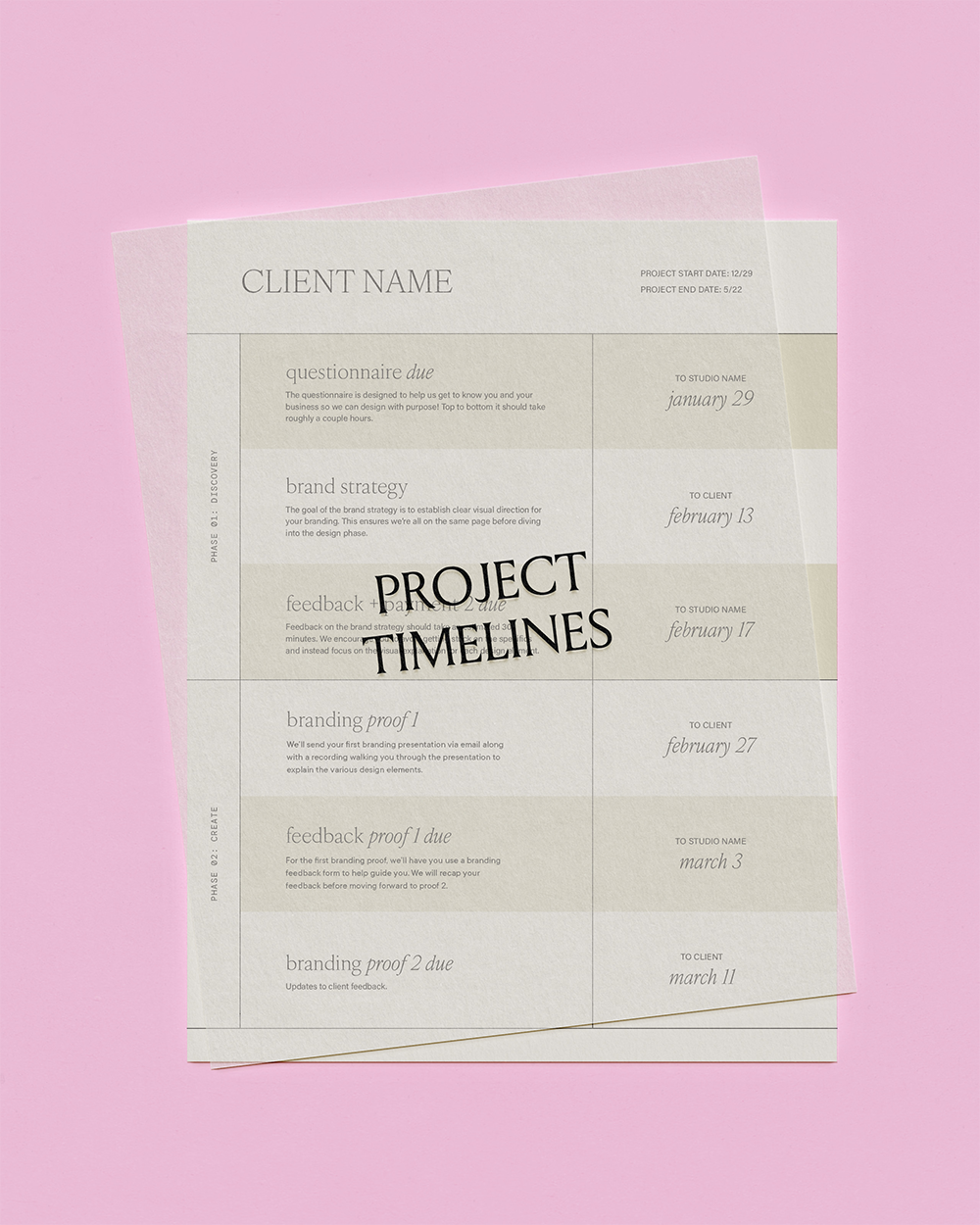
We build our timelines around process, not some random calendar dates. This way, every deliverable gets the breathing room it actually needs while keeping a smooth, natural flow from one phase to the next. Every date matters. Design time, feedback, revisions, and client due dates for things like website copy, photography, or dielines aren’t just filler. They’re real checkpoints that keep everyone on the same page.
Feedback windows? Right there in the timeline (and in the contract, and touched on in an intro call, and outlined in an email — you get it), so clients know exactly how long they have to review.
Communication + accountability
Our timelines aren’t hiding in the fine print. They’re front and center and baked right into the contract as a mutual agreement, so everyone knows exactly what’s expected and when. Clients get a detailed PDF upfront before kickoff, laying out every deliverable, due date, and feedback window, and get the chance to flag any conflicts upfront.
And here’s the thing, we don’t just set it and forget it either. We reference the timeline in emails, check-ins, and feedback reminders, and even share it with the clients more than once, to keep everyone synced, accountable, and prevent anything from slipping through the cracks.
How timelines changed the game
When I was just a solopreneur, timelines didn’t feel so make-or-break, but then I had a few projects that just never seemed to end and went WAY beyond the original scope of work. Without a set timeline, it meant looser boundaries with dragged-out turnarounds, fuzzy expectations, and the occasional creative burnout.
Now, we can plan capacity confidently, have been able to set realistic booking windows for potential clients, and give every client a predictable, stress-free experience. It’s not just about efficiency. It’s about protecting the creative energy that makes our work actually good, too.
Quick tips for creating your timeline
Start with a proven process, not guesswork.
Build breathing room into each key phase — nobody thrives on chaos.
Set feedback deadlines clearly (and nicely).
Keep the timeline visible. PS) We use Asana on our end for this.
Revisit and refine for each project. Timelines are living documents, not stone tablets.
ORRRRR save yourself the headache and just snag our timeline template! We’re sharing every step, deadline, and deliverable, all laid out crystal clear for your client. Yeah, the fact that we’re sharing all of this is almost too good to be true.

Tbh, timelines don’t just benefit you.
“Let me tell you a good story. Right now, we’re working on a super exciting rebrand that you’ll be seeing soon, and I’m collaborating with the designer who created the cover of my book, How Are You, Really. Her name is Briana, and her company is Brighten Made — and I love working with her because the minute you sign the contract, you get a project timeline.
It tells you when drafts are coming in, when your feedback is due, when your final assets will be delivered — and she follows it to a T. Or, even better, she surprises and delights us with an earlier delivery than expected. Every step of the way, I know exactly what to expect. I don’t have to email asking questions; I can pull up the timeline and have all the info in my hands. We’ve been matching it step by step throughout this process, and it’s honestly been amazing.
I let her know how much this has changed the experience for me. I never have to bother her because everything I need is right there. If you’re in a service-based business, having clear project timelines and communication about what’s happening, when you’ll get it, and when feedback is needed will totally change your client experience.”
— Goal Digger Episode 774: This Is Why You Have Unhappy Clients (And How to Fix It)